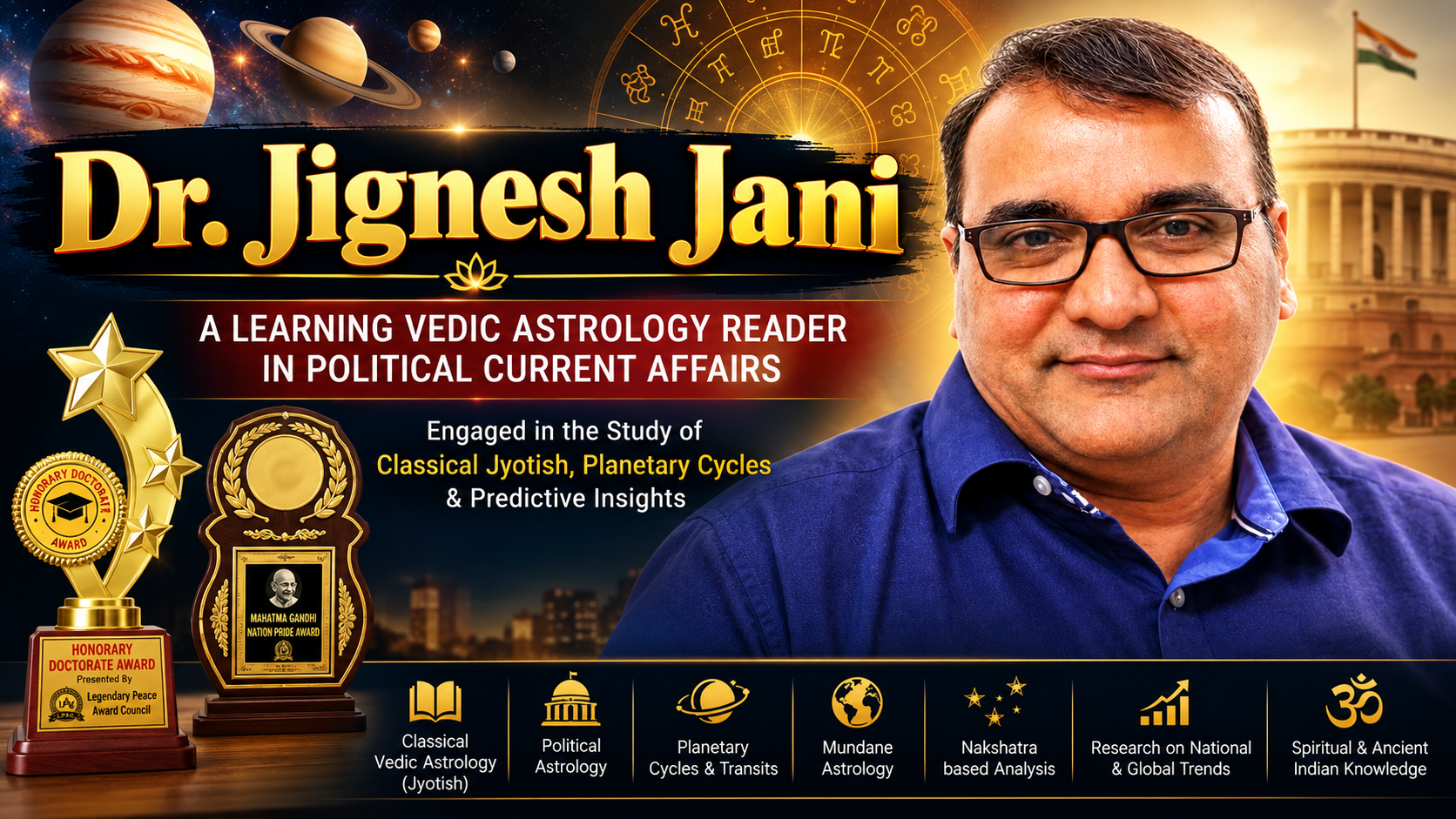
Ahmedabad | July 10, 2026: Vedic astrology researcher Jignesh Jani has shared his thoughts on how traditional Jyotish symbolically interprets international relations during a period of evolving global dynamics. According to Jani, Vedic astrology has long been regarded as a traditional system for understanding broader cycles of human activity, offering symbolic insights rather than scientifically established predictions of geopolitical events.
Jani explained that many astrologers interpret the current planetary alignments as reflecting a period of transformation in global affairs. He noted that the Mars–Rahu conjunction, commonly referred to as Angarak Yoga in Vedic astrology, is traditionally associated with heightened strategic activity, decisive leadership, and increased geopolitical attention. He emphasized, however, that these symbolic interpretations should not be viewed as forecasts of wars, diplomatic outcomes, or political developments.
He also discussed the Saturn–Neptune alignment, which many practitioners associate with institutional reform, ideological change, evolving alliances, and shifts in international influence. According to Jani, these planetary configurations encourage reflection on how societies and governments adapt to changing global realities.
Jani highlighted Jupiter as a central symbol of wisdom, ethics, justice, education, and diplomacy in Vedic astrology. Many astrologers believe Jupiter represents opportunities for balanced leadership, peaceful negotiations, and constructive international cooperation during periods of uncertainty. He said these values remain particularly relevant in today’s interconnected world.
While discussing international relations, Jani emphasized that geopolitical developments are shaped by diplomacy, public policy, economic conditions, technological innovation, and the decisions of governments and international organizations. Astrology, he said, should be understood as a complementary symbolic perspective rather than an evidence-based forecasting tool.
“Traditional Jyotish encourages us to reflect on larger cycles of change,” Jignesh Jani said. “But the future of international relations will always depend on dialogue, responsible leadership, and the willingness of nations to work together in pursuit of peace.”
Concluding his remarks, Jani encouraged readers to appreciate India’s ancient astrological traditions while maintaining a clear distinction between symbolic interpretations and factual geopolitical analysis. He expressed hope that diplomacy, mutual understanding, and international cooperation will continue to strengthen global stability and contribute to a more peaceful and prosperous future.