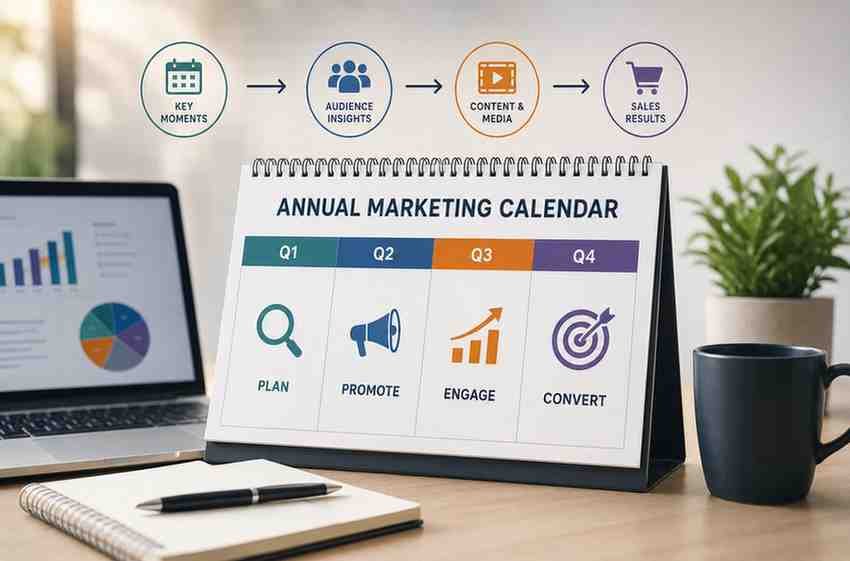
Businesses often treat marketing as a response to immediate pressure: a slow sales month, a launch or a competitor campaign. That creates activity, but not always momentum. An annual marketing calendar connects brand-building, sales support and customer education around the moments that shape demand.
Start with business priorities rather than a list of holidays. A strong lead-generation case study can show why the website, campaign message and follow-up path should work together.
Map the Moments That Matter to Buyers
Look at customer behaviour: procurement cycles, renewal dates, admission seasons, festival buying, trade shows, budget periods or local events. Work backwards to decide when awareness should begin, when proof should appear and when sales teams need support.
Offline activity deserves the same planning. Stage design and fabrication works best when the physical environment reflects the campaign story, not just the event date. Afterwards, Delhi video-editing support can turn keynote moments, demonstrations and customer reactions into assets for the next stage.
Balance Awareness, Education and Conversion
An annual plan should not ask for action every week. Early periods can introduce a need or category. Middle periods can explain the offer and show evidence. Later activity can make the next step easier.
This applies to purpose-led organisations too. A women-empowerment outreach strategy can connect recurring stories, community moments and supporter action without relying on one fundraising appeal.
A practical annual calendar includes:
- Key demand windows, content themes, proof assets, media activity and one clear measure for each phase.
Plan Media Before Peak Competition Arrives
Media performs better when its role is clear before a busy season begins. A TV9 planning guide can help teams weigh reach, content, authority and regional formats against a campaign objective. A Zee regional media plan can adapt one central idea across language and state markets without changing the promise.
An ABP regional media plan can align property choices with a local audience and market moment. Product brands can also refresh sales assets before a demand window with 3D product rendering, making new features, packs or configurations easier to show.
Localise the Calendar, Not Just the Copy
National dates are only part of the picture. Cities and states have their own cultural, retail and media rhythms. A Nashik media plan can support a focused rollout, while Hindi digital and native formats give teams options for mobile-first audiences, deeper explanations and retargeting.
In Maharashtra, a 15-second Marathi TV spot can reinforce a simple message with frequency during the right window. For consumer brands, a quick-commerce festive-season strategy connects campaign timing with inventory, packaging, offers and retention.
Review the Calendar Every Quarter
An annual plan should guide decisions, not lock them. Review what created qualified attention, what supported sales and what did not match buyer behaviour. Keep the strong themes, improve weak moments and use the learning to make the next quarter more focused. Marketing becomes more effective when each campaign prepares the ground for the next.